


Paranormal Hunters UK Training Academy for Aspiring Ghost Hunters
Ghost hunting looks simple from the outside. A torch, a recorder, a dark building, and a nervous walk through an empty corridor. In practice, good paranormal investigation needs far more than courage and curiosity.
A serious investigator has to manage evidence, people, safety, permissions, equipment, and expectations. They need to know when a creaking floorboard is just a creaking floorboard. They also need to treat witnesses with care, especially when those witnesses feel frightened in their own home or workplace.
That is where training matters. The Paranormal Hunters UK Training Academy gives aspiring ghost hunters a place to build the right habits before stepping into the field. It turns interest into method, and method is what separates a useful investigation from a noisy night with a camera.

Why ghost hunting needs proper training
The best paranormal investigators are not the ones who jump at every sound. They are the ones who stay calm, take notes, ask better questions, and test ordinary explanations first.
A building can sound alive at night. Pipes cool down. Timber shifts. Wildlife gets into roof spaces. Passing cars create light reflections. Old electrical wiring may interfere with equipment. A person’s memory can change when they are tired or anxious.
Training helps investigators recognise these basic issues before they reach for dramatic conclusions.
Good training also prevents common mistakes, such as:
Contaminating audio evidence by whispering near a recorder
Walking through a room without logging who entered and when
Mistaking dust, insects, or breath for visual anomalies
Asking leading questions during witness interviews
Ignoring health and safety risks in old or abandoned spaces
Sharing sensitive case details without permission
Paranormal work often takes place in unusual conditions. Investigators may be tired, cold, and working in low light. That makes discipline harder, not easier. A training academy gives new ghost hunters a structure they can fall back on when the atmosphere starts affecting their judgement.
The aim is not to remove the mystery. The aim is to protect the investigation from avoidable errors.
What aspiring ghost hunters learn at a training academy
A well-designed academy should cover both the practical and human sides of investigation. Equipment matters, but it is only one part of the work. A strong investigator knows how to plan, observe, record, question, and review.
How to plan an investigation
Before any team enters a location, the investigation should have a clear purpose. Is the aim to document reported activity? To support a worried resident? To test claims made at a historic venue? Each purpose shapes the approach.
Planning may include:
Checking permissions in writing
Understanding access routes and parking
Identifying hazards before nightfall
Agreeing which rooms or areas will be covered
Assigning roles within the team
Setting start and finish times
Preparing consent forms where needed
Deciding how evidence will be stored
This might sound less exciting than using equipment in a dark room, but it is where many good investigations are won or lost. Poor planning leads to confusion. Confusion leads to weak evidence.
How to use equipment without overtrusting it
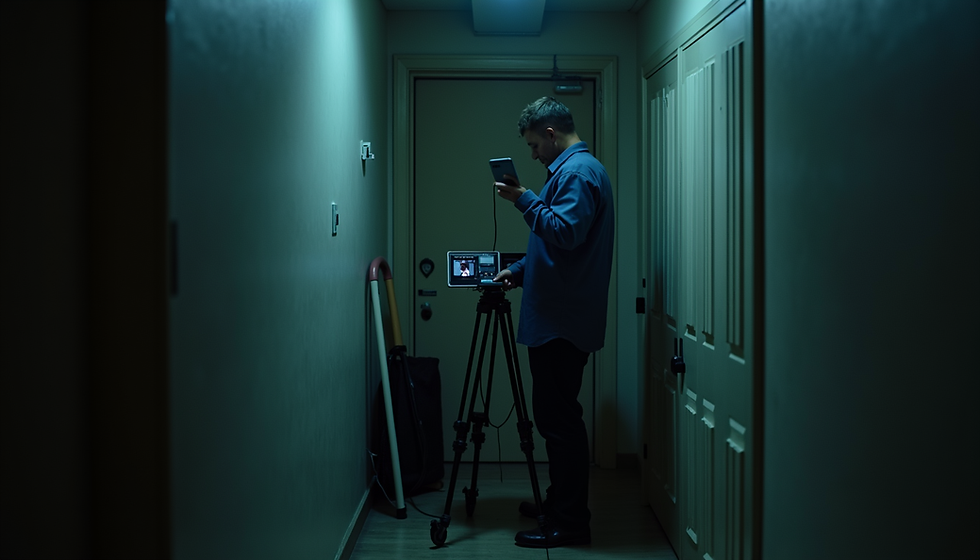
Ghost hunting equipment can be useful, but only when handled carefully. An EMF meter, digital voice recorder, trigger object, thermometer, or static camera does not prove anything on its own.
Training should teach what each tool does, what can affect it, and what its limits are.
For example, an EMF meter may react to electrical sources, faulty wiring, mobile phones, or nearby appliances. A drop in temperature may come from a draught, open vent, or change in building materials. A sound on a recorder may come from a team member shifting their weight in another room.
A trained investigator asks, “What else could explain this?” before claiming anything unusual.
That one question keeps the work honest.

How to interview witnesses with care
A witness interview is not a performance. It is a careful conversation.
People who report strange experiences may feel embarrassed, anxious, or dismissed. A good investigator does not mock them, pressure them, or feed them ideas. Instead, they listen and record the account as clearly as possible.
Helpful questions are open and neutral:
What did you notice?
Where were you standing?
What time of day was it?
Was anyone else present?
Had anything changed in the building recently?
Have you experienced the same thing more than once?
Poor questions put ideas into the witness’s mind. For example, asking, “Did you feel an evil presence?” may shape the answer. Asking, “How did the room feel to you?” leaves space for the person to describe their own experience.
Training in this area is vital because witness accounts often guide the whole case.
How to review evidence properly
Evidence review can be slower than the investigation itself. A team may collect hours of video, audio, photographs, temperature readings, and written notes. Without a system, it becomes hard to know what matters.
A good review process records:
The time of each possible event
Who was present
Where each team member was
What equipment was running
What normal explanations were checked
Whether the event was repeatable
Whether more than one source captured it
One unexplained sound may be interesting. The same sound captured at the same time by audio, video, and written team notes is more useful. Even then, “unexplained” does not mean “paranormal”. It means the team has not found a normal explanation yet.
That distinction matters.
Fieldwork in the UK brings its own challenges
Paranormal investigation in the UK often involves old buildings, changing weather, narrow access, and strict site rules. Castles, inns, theatres, private homes, churches, museums, and former industrial sites all come with different risks.
A rainy evening can make stone steps slippery. Rural locations may have poor phone signal. Older buildings may have uneven floors, low beams, loose plaster, or restricted areas. Some locations also have heritage protection, which means nothing should be moved, touched, marked, or disturbed without permission.
Training should prepare investigators for this kind of fieldwork. Safety is not a dull extra. It decides whether the investigation can happen at all.
A sensible field kit may include:
Torch and spare batteries
First aid basics
Warm layers and sturdy footwear
Notebook and pens
Fully charged phone
Power bank
Gloves where appropriate
Permission documents
Identification if required by the venue
Water and simple snacks for long sessions
The UK also has a wide range of belief systems and attitudes towards ghosts, spirits, folklore, and hauntings. A trained investigator respects that. Some clients may want practical reassurance. Others may view their experiences through religious, cultural, or spiritual beliefs.
Respect does not mean agreeing with every claim. It means handling people and places with care.

The right mindset matters as much as the equipment
Paranormal investigation attracts people for different reasons. Some are drawn by personal experiences. Some love history. Some enjoy the technical side. Some want to test claims. A strong team can include all of these views, as long as everyone follows the same standards.
The most useful mindset combines curiosity with restraint.
Curiosity keeps an investigator open to unusual reports. Restraint stops them from rushing to conclusions. Both are needed. A team that dismisses everything may miss something interesting. A team that believes everything may create evidence out of noise.
The academy environment helps new investigators practise that balance. It gives them a place to make mistakes, ask questions, and learn from experienced team members before they face a live case.
Key habits include:
Speak clearly when moving around so audio can be checked later
Call out noises made by the team, such as footsteps or coughing
Keep personal theories separate from recorded facts
Avoid frightening language during active investigations
Treat every location as someone’s home, workplace, or heritage site
Accept that some cases will end with no clear answer
That last point can be hard for beginners. Not every investigation produces dramatic evidence. Many produce small observations, partial explanations, or nothing unusual at all. That is normal.
A quiet investigation is not a failed one if the team worked safely, respectfully, and accurately.
Ethics should guide every investigation
Ghost hunting often deals with private stories. A family may be losing sleep. A venue owner may worry about reputation. A staff member may feel uncomfortable working alone. These situations need tact.
Ethical training should cover privacy, consent, and communication. Investigators should not publish names, addresses, photographs, or recordings without clear permission. They should also be careful with children, vulnerable adults, and anyone who may be distressed.
There is another ethical issue too: honesty.
A responsible investigator does not promise to remove a haunting, prove an afterlife, or deliver certainty where none exists. They explain what they can do, what they cannot do, and how the findings will be shared.
A clear final report may include:
A summary of the original claims
The methods used during the investigation
Relevant environmental notes
Evidence that was ruled out
Items that remain unexplained
Recommendations for practical follow-up
Sometimes the best recommendation is not paranormal at all. It may be fitting a carbon monoxide alarm, checking heating pipes, repairing a draughty window, reviewing security footage, or speaking with a building surveyor. That practical approach strengthens trust.
Good investigators care more about the truth than the thrill.

How to know if ghost hunting training is the right next step
Training is a good fit for anyone who wants to take paranormal investigation seriously. It suits people who enjoy mystery but also value patience, safety, and good records.
The right student is not necessarily the bravest person in the room. More often, it is the person who can stay steady when others get excited. It is the person who checks the window latch, reviews the timeline, listens to the witness, and labels the audio file properly.
Before joining any academy or training programme, it helps to ask a few practical questions:
Does the training include safety and permissions?
Are students taught to question evidence, not just collect it?
Is witness care part of the course?
Are ethical standards explained clearly?
Will there be hands-on practice?
Are ordinary explanations treated seriously?
Does the team respect locations and clients?
A good training path should leave a new investigator more confident, but also more careful. That is the mark of real progress.
Ghost hunting will always carry a sense of mystery. That is part of its pull. Yet the most valuable investigators are not chasing shadows for entertainment. They are documenting, testing, listening, and learning.
For aspiring ghost hunters across the UK, a training academy can provide the foundation that enthusiasm alone cannot. Start with the basics. Build sound habits. Respect the people and places involved. Then, when the lights go out and the building settles into silence, the work can begin properly.


Comments